Strong Towns Toronto - Election Survey 2026
Strong Towns Toronto's election working group created a questionnaire and pledges for the Toronto 2026 municipal councilor election. Councilor candidates had the opportunity to express their ideas and alignment with Strong Towns principles.
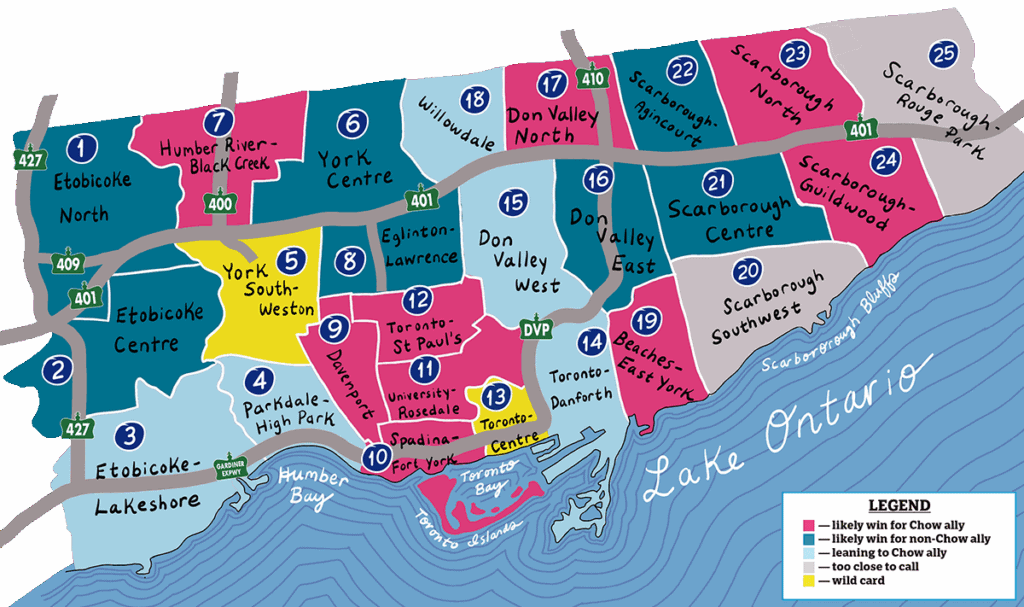
We hope this helps members of our community determine who would be best positioned to build up an alternative to the Suburban Experiment. Candidates from the following wards responded: 1, 4, 6, 8, 10, 11, 13, 14, 15, 19, 21, 25.
QUESTIONS:
1. Toronto needs hundreds of thousands of new homes to address the housing crisis. How should we build those homes? (Check all that apply)
More suburban growth on former farmland outside Toronto
Multiplexes (4 - 6 units) in neighbourhoods
Low rise buildings and stacked townhomes in neighbourhoods
Low rise buildings and stacked townhomes on major streets and avenues
Mid-rise buildings (5-14 storeys) on major streets and avenues
High rise (15 storeys +) buildings near Subway and GO stations
Other:
2. As each multiplex can add at most 6 new housing units (4 in most wards), multiplexes need to be constructed in larger quantities. Developers claim that without additional permissions for the allowed size of the building, very few multiplexes are profitable to build. What changes for multiplexes would you approve, if any? (Check all that apply)
Allow one (or more) additional story compared to the existing neighbourhood
Allow homes closer to the street or back of the property, reducing required yard space.
Allow more tree removal to build housing.
Make setbacks flexible to compensate for space taken by trees
Other:
3. Which of these measures for slowing traffic do you support throughout your ward? (Check all that apply)
Chicanes
Bulb-outs/curb extensions
Narrow lanes
Bike lanes
Raised Intersections
Speed humps/bumps/cushions
Modal filters
Other:
4. early-car-free, car-lite, and ‘autoluw’, are all attempts to describe streets where the few cars are guests and travel at pedestrian speeds, as if the whole street is a crosswalk. How much of Toronto’s streets would you support making car free or car lite? (Check all that apply)
None
Commercial areas that aren't major streets for cars
Individual residential roads, by the vote of the street's residents
Most of downtown (excluding specific traffic corridors)
Small specific areas (school zones, high-foot-traffic shopping areas, etc)
Any street (regardless of size) with extremely high pedestrian traffic (e.g., U of T campus)
5. Vision Zero is a commitment to reduce traffic deaths to zero. Some cities have succeeded, with zero preventable deaths. Toronto has cut fatalities in half and serious injuries by a quarter. Generally, slowing vehicles and changing roads away from designs that support higher speeds is the major change.
How much should vehicle movement be controlled to prevent deaths on our streets?
Minimal impact only. Improve signage and paint, but don’t remove space or speed for cars.
Reduce vehicle speeds in neighbourhoods. This requires physical changes, including some which take space previously used as street parking.
Reduce lanes and remove parking in order to implement traffic calming measures - even on major streets, where recommended by experts.
Whatever it takes to reduce preventable traffic deaths to zero.
6. Parking minimums have been eliminated for most buildings. Mid-rises are still required to have some parking, such as for visitors. There are no limits on the maximum parking allowed. We should:
Bring back mandatory minimum parking spaces
Keep the current standards
Remove remaining mandatory parking for cars
Other:
7. Toronto roads are congested and always getting worse. How would you change roads to alleviate the problem?
Widen existing arterial roads and/or convert more streets to arterial roads
Convert vehicle lanes to more space-efficient public/active transit
Remove bus/pedestrian/bike lanes to make more space for private vehicles
Other:
7a. If you chose “expand roads”, how would you find the money for one of the most expensive things a city can do?
8. Toronto’s budget is in a constant state of crisis, and changes from the province are going to reduce revenues farther, especially for capital spending. The TTC maintenance backlog (called the State of Good Repair backlog) is getting worse by almost $800M/year. Addressing that hidden deficit would amount to a 15% property tax increase beyond inflation. Assuming the province rejects any of our requests for alternatives, how will you deal with this shortfall?
9. How will you react to the reduction of development charges as a revenue stream for the city? Do you have big ideas for reducing spending? Are you in favour of boosting other revenue streams?
10. Detached homes with yards and wide streets do not pay as much property tax as it costs to service these homes over a 40 year period, and these owners are therefore subsidized by apartment dwellers. Strong Towns points to this as the major cause of municipal budget problems. How would you address this financial challenge and inequity?
11. Describe what a safe and productive street would look like in your ward?
PLEDGES:
12. Transit signal priority (TSP) reduces delays at controlled intersections by extending green lights, shortening red lights, or otherwise altering the pattern of signals to provide a green light to the bus/streetcar. They can be used only when the bus/train is behind schedule, or always on. The hardware is in place for most/all relevant intersections.
Up to the limits of practical engineering, I will support the implementation of transit signal priority measures for all TTC passenger vehicles. I will support the addition and expansion of TSP to include as many methods and routes as possible, without delay.
I will support RapidTO lanes for all key bus routes across the city, even where this would require limitations such as no left turns for drivers
I will support actions that make Toronto’s neighbourhoods more walkable, in my ward, and city-wide.
13. Toronto pilot projects are slow, expensive, and often fail. Other cities have had immense success with quick, experimental, iterative designs. They try something cheap and quick at a minimal scale, and make frequent changes in response to feedback. This replaces the usual abstract consultation process. Once the residents are happy, the design is rolled out to more of the city.
I will support iterative, collaborative, experimental projects for Toronto’s neighbourhoods and streets
14. Toronto’s proposal for small retail in neighbourhoods was amended until it only allows some corner stores. The original proposal would create spaces for entrepreneurs, and allow businesses such as cafes and bakeries near our homes.
I will reintroduce and support the original proposal to allow retail and services in neighbourhoods