The Future of Toronto’s Stroads: Uncertainty on Dundas
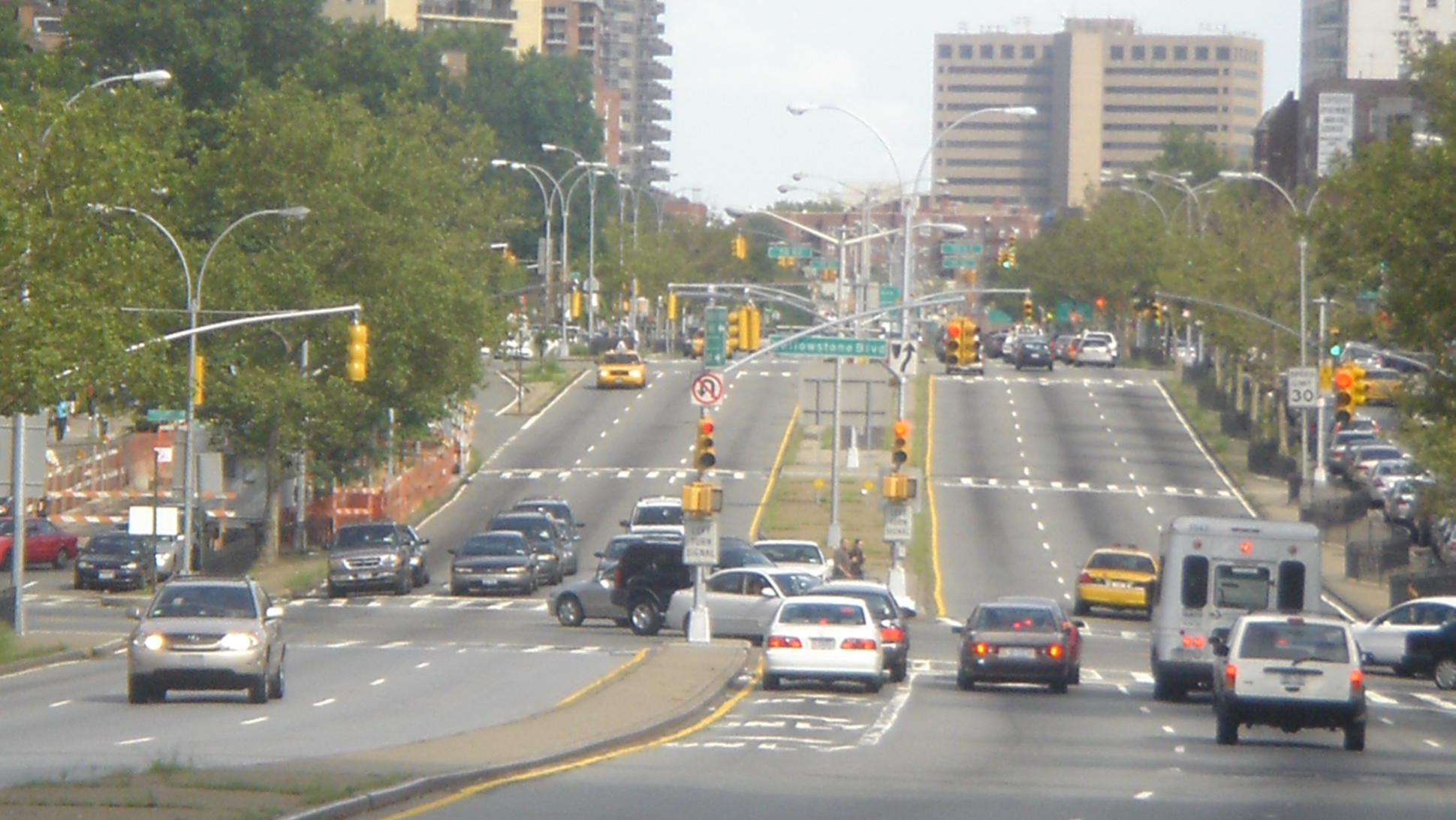
The stroad, a theoretically flexible surface transportation solution that fails to deliver on its many promises, has become one of the hallmarks of 20th century suburban planning in North America. Designed to facilitate speedy travel and host numerous destinations, it is both a conduit and a locale, a jack of all trades that masters none. Generally defined as major and minor arterials in Toronto’s Road Classification System, anyone who spends time in Toronto will wind up encountering them.
A prime example of their present day condition would be the previously mentioned stretch of Dundas between the former Six Points Interchange and the 427. Built as part of Etobicoke's post-war boom, this stroad was characterized by malls and car dealerships in the 20th century. Now, in the 21st century, it has developed into a roaring engine of vertical growth.
Rapidly sprouting at one end of this stroad, you'll find the West Theater Lands. The heart of a planned neighbourhood of high-rises is being built on the now demolished Six Points Interchange, a freeway junction that looked like a particularly muddled plate of spaghetti. A parcel of almost 20 acres was created by combining land freed up by the interchange’s demolition with that of the abandoned West Wood Theater and a municipal snow storage facility. It will eventually play host to a forest of towers, parklands, and the new Etobicoke Civic Centre.
Rising at the western end of our stroad, you’ll find the grounds of Cloverdale Mall. QuadReal Property Group has slated it for extensive redevelopment as part of a roughly 30 acre plan, echoing the mall’s past. Cloverdale was itself the result of Etobicoke’s earlier post-war development boom. Hundreds of acres of farmland, which once supplied Eaton's with local agricultural products, were transformed into tracts of North American suburbia. If today's redevelopment plan is completed, thousands of homes will be spread across 10 towers and multiple mid-rises within acres of shared community and green space.
While these two would be impressive by themselves, there is a lot happening along this stroad. This includes both planned and completed projects coming from a diverse array of developers including Concert Properties, Pinnacle International, CenterCourt, Main + Main, and First Capital. To say this area is being fundamentally transformed barely scratches the surface. Complementing these developments, a major rework of the stroad’s form is also brewing.
Metrolinx’s Dundas Bus Rapid Transit (BRT) project would extend a transit corridor from the Kipling Transit Hub in Toronto all the way to Hamilton, knitting them together with Mississauga, Oakville, and Burlington in the process. Transit priority lanes would be installed alongside enhanced infrastructure for pedestrians and cyclists, allowing future residents of the area to safely adopt car-lite and car-free lifestyles with a wide array of opportunities for employment, recreation, and connection. In close proximity to the Kipling Transit Hub, the area is already well served by some of the best transit connections in the Greater Toronto Area.
Unfortunately, this project has become mired in the uncertainty generated by shifting political winds. With Toronto’s waterfront and numerous transportation projects like the Ontario Line and the 401 Tunnel sucking up all the oxygen, Metrolinx seems to have put the Dundas BRT on the backburner. While Stantec was selected to deliver designs for the Mississauga East section of the Dundas BRT in 2025, there is no detectable movement on the Toronto portion.
It’s possible that all the previously discussed developments will be completed before local work on the planned Dundas BRT moves forward. At best, this would represent a massive missed opportunity. At worst, this would be a serious threat to the livability of the area as numerous new residents would overwhelm the existing 20th century design, leading to congestion, conflict, and fatalities.