Can Toronto become a Cycling City?
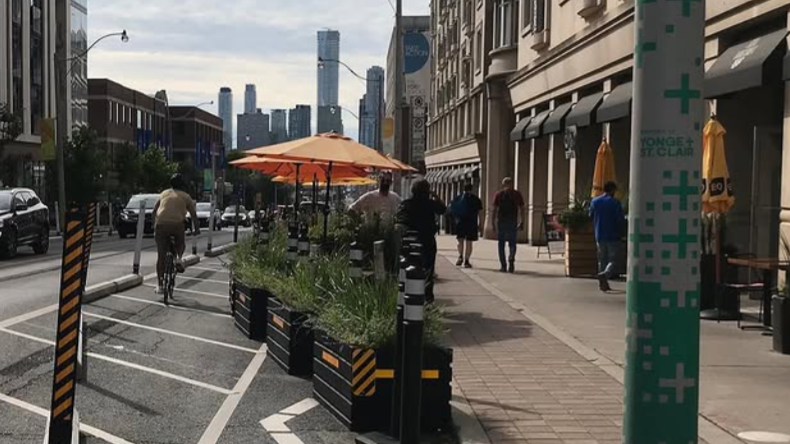
Whenever we attend community events, participate in municipal consultations, or explore the various corners of the internet which focus on Toronto, we hear from some folks who are skeptical of Toronto becoming a cycling city. They question the viability of cycling in Toronto, they see their taxes going up, and they feel ignored by a government which keeps delivering outcomes they don’t support. They wonder why our city is spending money on a hopeless project designed by disconnected municipal bureaucrats. It’s a lot to unpack, but we’ll do our best.
Similar to our situation in the early 20th century, Toronto’s population is rapidly expanding, our streets are clogged, and travelling across our city is difficult. We were able to solve these problems in the 20th century by demolishing neighbourhoods and the existing streetcar network to make room for wider car-dominated roads, new “superhighways”, as well as making investments in heavy rail. In the 21st century, the car-oriented solutions we previously implemented are politically untenable and deeply unpopular.
You could remove existing bike lanes to make more mid-block road capacity. However, as flagged during Amber Morley’s community meeting regarding the western extension of the Bloor bike lanes, numerous intersections across the city would also need to be expanded to increase road capacity and car throughput. This means an unimaginable number of homes and businesses would need to be demolished where major arterials like Bloor, Yonge, and Spadina intersect with other roads.
If you wanted to widen existing highways and create new ones like we did in the 20th century, you have only a few options. You could resuscitate projects like the Spadina Expressway and widen existing expressways like the Gardiner and the 427. All these options also entail an unimaginable number of homes and businesses across the city being demolished. Say goodbye to the Annex, Kensington Market, Chinatown, and all the towers overlooking the Gardiner!
Without enlarged intersections and new highways, more cars going at speeds acceptable to drivers can’t fit in Toronto. Toronto’s expansion of cycling infrastructure is not some bureaucratic whim, it's the result of geometry, intense consultation, and direction from our elected municipal leaders supporting cycling infrastructure with year-round maintenance.
In terms of usage, Toronto has seen a very clear uptick in cycling. Bike Share Toronto tracks every one of its bikes and shares the data. On an annual basis, they’ve reported that total bike share trips went from 800 thousand in 2016 to 7.8 million in 2026. We’ve seen a 29% compound annual growth rate for bike share trips alone!
If you investigate bike share trip volumes during snowy months (January to April + November and December), you’ll find that between 2017 and 2024 we saw a 415% increase. That’s an increase from 385,492 cycling trips in 2017 to 1,987,130 in 2024 during months with snow. Year round, whether it snows or not, cycling is exploding in popularity.
There’s way more to unpack, but hopefully you can see that Toronto becoming a cycling city isn’t some pie in the sky scheme. It is a serious proposal with support from both publicly available data and a broad coalition of Toronto’s residents.